All Norfolk Destinations
Browse our complete collection of group cottage locations. Each destination offers unique experiences and carefully selected properties perfect for group holidays.
Discover amazing large cottage destinations across Norfolk. From famous seaside towns to historic market villages and Broads countryside escapes, find your perfect group getaway location.
Browse our complete collection of group cottage locations. Each destination offers unique experiences and carefully selected properties perfect for group holidays.
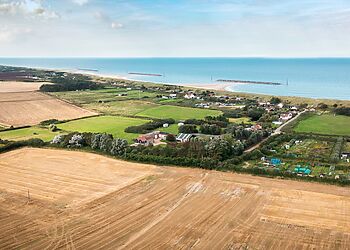
Norfolk divides neatly into three holidays. The north coast has huge sandy beaches, salt marshes, seals and flint villages. The Broads, in the east, are a maze of rivers and lakes best explored by boat. In the middle sits Norwich, a medieval city with a cathedral, castle and lively lanes of independent shops.
Big skies are everywhere.
The location pages above list our large cottages in Norfolk by town and village, with the big houses in each place first and others within about 15 miles below. This guide explains what each area is like for a group of family or friends.
Prefer to search by size? Browse all our large holiday houses, or go straight to cottages sleeping 8 or more, 10 or more or 12 or more. Every card shows how many each house sleeps.
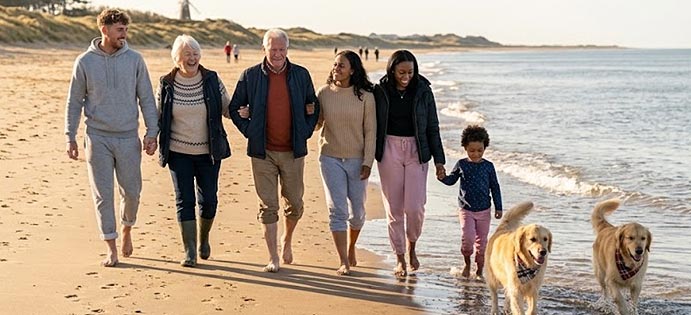
Most of this coast is a protected National Landscape, and it's the most popular part of the county for group holidays.
Wells-next-the-Sea is a working harbour town with a long sandy beach, a row of colourful beach huts and pinewoods behind the dunes. Holkham beach, just west, is one of the finest in England, backed by the Holkham Estate's deer park and hall. Burnham Market, a few miles inland, is a smart Georgian village with delis, galleries and good pubs around its green.
Blakeney is a quay village on the salt marshes. Boat trips from Blakeney and nearby Morston take you out to see the seals at Blakeney Point, home to England's largest grey seal colony. It's a highlight for every age group. Holt, inland, is a Georgian market town of independent shops and cafés.
Cromer is famous for its crabs and its pier, which still hosts a traditional end-of-the-pier show. Sheringham, next door, is the home of the North Norfolk Railway, whose steam trains run along the coast to Holt. Both towns have sandy beaches at low tide and are on the Bittern Line from Norwich.
Hunstanton is unusual for an east coast resort: it faces west across the Wash, so you can watch the sun set over the sea. Its striped red and white cliffs are a landmark. At low tide, look for fossils at their base. The Sandringham Estate, the King's country home, is about 15 minutes away, and its gardens and country park are open to visitors.

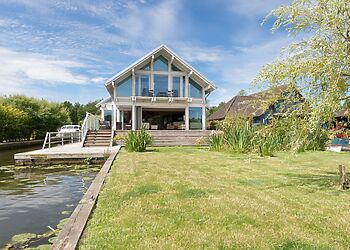
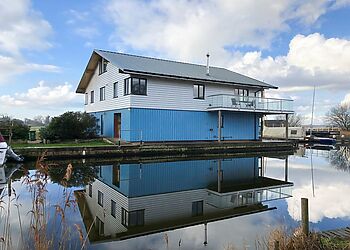
The Broads are Britain's largest protected wetland, with around 125 miles of lock-free waterways. They have the same status as a national park. Hiring a day boat is the best group activity in the county: no licence is needed, and a large boat can take a whole family.
Winterton-on-Sea has wild dunes and a quiet beach. From November to February, grey seals have their pups on the beaches around Horsey and Winterton, and there's a viewing area with volunteer wardens. Happisburgh has a red and white striped lighthouse, the oldest working one in East Anglia. Great Yarmouth is the traditional seaside resort, with a pleasure beach, piers and a long sandy shore.
Norwich has a Norman cathedral with the second-tallest spire in England, and a castle that is now a museum. Its large open-air market and the Norwich Lanes are full of independent shops. A day in the city is an easy break from the beach.
Inland towns are quieter and often better value. Fakenham has a racecourse with jump meetings through the year. Dereham, Diss, with its six-acre mere, and Melton Constable, a former railway village, all make good bases within an hour of the coast.
| Area | Best for | Good to know |
|---|---|---|
| Wells, Holkham and Burnham Market | Beach holidays, walking, food lovers | Very busy in August; book early |
| Blakeney and Holt | Seal trips, birdwatching, quiet villages | Boat trips depend on the tides |
| Cromer and Sheringham | Families, steam trains, crab | Train link to Norwich |
| Hunstanton | Sunsets, Sandringham, sandy beach | Closer to the A10 and King's Lynn |
| The Broads | Boating, pubs by the water | Day boats need no licence |
| Norwich and inland | City breaks, better value | An hour from most beaches |

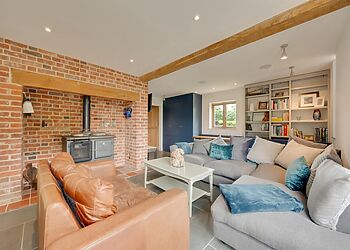
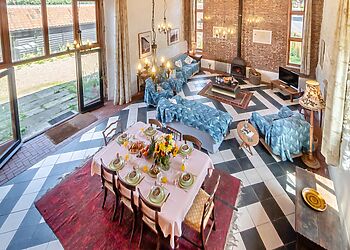
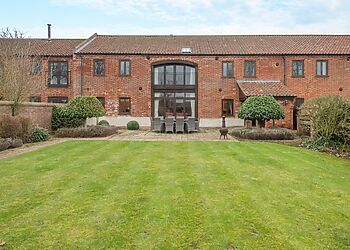
Big houses in Norfolk are often flint farmhouses, converted barns, Victorian rectories and old mills. Look closely at:
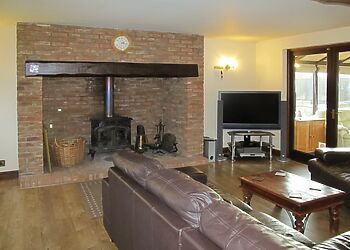
Norfolk is one of the driest counties in England, which helps any time of year. Summer is busiest on the north coast. Spring and autumn are great for birdwatching, when huge flocks of pink-footed geese fly over the coast at dawn and dusk in winter. The seal pup season from November to February gives a reason to visit in the colder months, and a big house with a wood burner makes a great Christmas or New Year base.
Norfolk has no motorway. The A11 links Norwich to the M11 and London, and the A47 crosses the county from King's Lynn to Great Yarmouth. Trains run from London Liverpool Street to Norwich in under two hours, and from King's Cross to King's Lynn. The Bittern Line runs from Norwich to Cromer and Sheringham. The north coast is best reached by car, and lanes are narrow, so allow extra time.